
Never Stop Therapy: Essential CPAP Battery Guide for Travel (2025 Update)
Key Takeaways
-
CPAP batteries are essential for travel and as backup power, ensuring uninterrupted therapy regardless of location or power loss.
-
Travelers must turn off the heated humidifier and heated tubing to maximize battery life, as these features can reduce run time by 50% to 75%.
-
For air travel, lithium-ion batteries must be packed in carry-on luggage and generally have a per-battery limit of 160 Watt-hours (Wh) for spare units.
CPAP patients should never sleep without their machines. That is why a number of CPAP manufacturers are producing travel CPAP machines - so users can continue their therapy on the go, away from home. However, for individuals who are camping or without access to power, a travel CPAP isn't enough. Here is everything you need to know about travel CPAP and batteries.
Can CPAP Run on Batteries?
The short answer is yes. Popular CPAP manufacturers, such as ResMed and Philips Respironics make their own batteries to power their machines. Other companies, such as Battery Power Solutions and Medistrom also produce batteries that power popular CPAP machines.
When selecting a battery for your travel CPAP machine, it is important to make sure the devices are compatible. Some machines operate at different voltages, so the improper battery could damage your machine. Reference your CPAP's technical specifications, located in the user manual, to determine which battery may work best for you.
CPAP Travel Batteries
As mentioned, there are a number of choices when it comes to CPAP batteries. We've listed a few of the more popular options below.
Freedom Travel Battery V2
The Freedom Travel CPAP Battery V2 provides between 12-24V of variable output power, making it ideal for most machines. A backlit LCD screen provides crucial information, such as remaining battery life. Additionally, you can link two Freedom batteries together for higher pressure settings or longer trips. A USB 3.0 port also allows you to easily charge devices at the same time as your CPAP.
The Freedom Travel CPAP Battery is ideal for travel CPAPs such as the AirMini, DreamStation Go, and the Transcend 3.
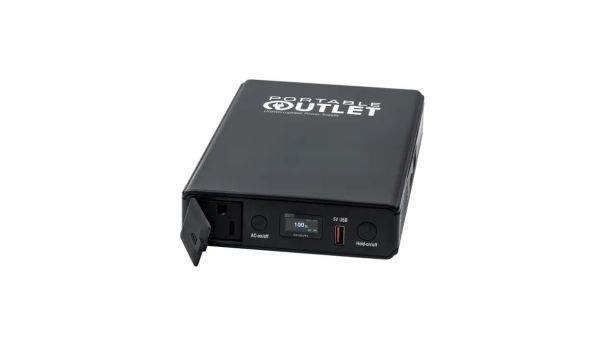
Portable Outlet Battery
One of the newest CPAP travel batteries at The CPAP Shop is the Portable Outlet Battery. This device provides 155W of portable power to most CPAP machines - simply plug your device into the portable outlet on the battery. In addition to charging your CPAP machine, this portable battery includes two USB ports for charging additional devices. An LED indicator lets you know that the battery is working.
Medistrom Pilot Series
Lastly, the Medistrom Pilot 12 and Medistrom Pilot 24 batteries are popular choices for CPAP patients looking for portable power. The Pilot 12 battery is compatible with Philips Respironics CPAP machines, while the Pilot 24 is compatible with ResMed devices. Both can provide up to 16 hours of battery life, depending on CPAP machine settings.
Powering Your CPAP Machine While Traveling
When traveling, you should take certain things into account including how long you will be gone, how you are traveling and where you are traveling. If traveling overseas, most CPAP’s will work as long as you have a plug adapter or are using travel CPAP batteries. Most lithium-ion batteries are approved by the FAA for in-flight use, but you may want to contact your airline prior to flying to confirm.
Batteries are also useful in case the power unexpectedly goes out, or the campsite generator stops working. Most machines will automatically switch to battery power if AC power is suddenly interrupted. This way, CPAP therapy continues. Once AC power is restored, the device will switch back, conserving your battery's life.
So Which Travel CPAP Machine Is Best?
Your choice in CPAP battery will be determined by the travel CPAP machine you select. There are many options, including:
- Philips Respironics DreamStation Go Auto CPAP
- ResMed AirMini Travel CPAP
- Transcend 3 Travel CPAP
- HDM Z2 Travel CPAP
Each device has their own pros & cons, depending on patient needs. For example, if you need humidification while traveling, the DreamStation Go is the only one that offers a refillable humidifier. If you need lightweight and compact, the AirMini is the clear winner.
Refer to article on how to choose a travel CPAP machine to make a decision based on your needs. From there, you can select what battery you require. If you still have questions, or need additional information on traveling with CPAP and batteries, contact our knowledgeable customer care team.
Give us a call at 866-414-9700 or email questions@thecpapshop.com today.

This post was updated with the latest information in November 2025.
If you rely on your CPAP machine every night, traveling without a backup power source is a serious risk. Whether you’re heading overseas, camping off-grid, or simply concerned about an unexpected power outage in a hotel, a CPAP battery is a non-negotiable accessory.
Here is everything you need to know about powering your CPAP machine safely and effectively while on the move.
Why You Need a Dedicated CPAP Battery
A CPAP battery serves two critical purposes:
-
Remote Travel: Provides power for camping, RV trips, boating, or staying in locations without reliable AC power.
-
Backup Power: Acts as an uninterruptible power supply (UPS) for hotels, cruise ships, or at-home use, ensuring your therapy continues automatically if wall power is lost.
Flying with your CPAP Battery: FAA & TSA Rules
Traveling with medical equipment requires specific knowledge, especially regarding lithium-ion batteries.
CPAP Machine (The Device)
-
CPAP machines are classified as medical devices by the FAA and TSA.
-
They do not count as one of your carry-on bags or personal items.
-
We strongly recommend keeping your CPAP machine with you as a carry-on at all times.
CPAP Battery (The Power Source)
-
Batteries MUST be carried in your carry-on luggage. They are prohibited in checked bags due to fire risk.
-
Watt-Hour (Wh) Limit: Most airlines follow FAA guidelines. You are allowed to carry:
-
An unlimited number of batteries under 100 Wh.
-
Up to two (2) larger spare batteries ranging from 101 Wh to 160 Wh.
-
-
Check the Label: The Watt-hour rating is usually clearly marked on the battery. If not, you can calculate it: (Volts x Amp Hours) / 1000 = Watt Hours.
Powering Your CPAP Machine While Traveling
When traveling, you should take certain things into account including how long you will be gone, how you are traveling and where you are traveling. If traveling overseas, most CPAP’s will work as long as you have a plug adapter or are using travel CPAP batteries. Most lithium-ion batteries are approved by the FAA for in-flight use, but you may want to contact your airline prior to flying to confirm.
Batteries are also useful in case the power unexpectedly goes out, or the campsite generator stops working. Most machines will automatically switch to battery power if AC power is suddenly interrupted. This way, CPAP therapy continues. Once AC power is restored, the device will switch back, conserving your battery's life.
Choosing the Right Battery for Your CPAP
Your choice of battery depends on your machine type, required run time, and destination. We categorize batteries into two main types:
Dedicated CPAP Batteries (Direct Connection)
These batteries are designed specifically for CPAP machines and connect directly via a DC cable (eliminating the power brick). This is the most efficient connection.
| Recommended Model | Compatible Machine | Max Run Time | Best For |
| Medistrom Pilot 24 Lite | Resmed Machines | 1-2 nights | Overnight camping, backout power |
| Medistrom Pilot 12 Lite | Philips Respironics Machines | 1-2 nights | Power backup, short trips |
Portable Power Stations (AC Connections)
These larger, multi-purpose units provide a standard wall outlet (AC) which allows you to simply plug in your CPAP machine's regular power supply. They offer significantly longer run times.
| Recommended Model | Run Time | Key Specs | Best For |
| Freedom CPAP Battery 160 | 3-5 nights | 160 Wh (Maximum carryon on capacity) | Longer, off-grid trips, international travel, cruises |
| Zopec Explore Mini Battery | 1-2 nights | 98 Wh - 99.5 Wh | Weekends, flights, extra-light packing |
Essential Traveling Checklist
Before you head out, make sure you have:
-
The Battery and Correct Adapter Cable: Ensure you have the specific DC adapter cable for your CPAP machine model.
-
International Plug Adapter: If traveling overseas, you’ll need the correct plug adapter (even with a battery, for recharging).
-
Prescription: Always carry a copy of your CPAP prescription.
-
Customs/TSA Letter: A physician’s note explaining that your CPAP is essential medical equipment can expedite security checks.
If you are still unsure which battery fits your travel style and machine, contact our knowledgeable customer care team. Call us at 866-414-9700 or browse our full selection of CPAP Batteries and Power Solutions.
Want to learn more about more than just batteries, including more infortmation about travel CPAP therapy? Check out this comprehensive guide that includes everything you need to know about traveling with CPAP therapy.


