

A Short History of CPAP: From a Vacuum Cleaner Motor to Your Nightstand
Key Takeaways
- CPAP therapy is less than 45 years old — it was invented in 1981 by an Australian physician who built the first working prototype out of a vacuum cleaner motor, plastic tubing, and a hand-molded mask.
- Before CPAP, the treatment for severe sleep apnea was surgical — a tracheostomy, a permanent surgical opening in the windpipe, was one of the only options doctors had for the most severe cases.
- Every part of the modern machine exists because of a specific complaint — heated humidifiers, auto-adjusting pressure, quieter motors, and app-based data tracking were each added to solve a real problem early users reported.
A Therapy Younger Than the Personal Computer
It's easy to assume CPAP has been around forever — it has that kind of institutional, unremarkable-medical-equipment feel to it. In reality, continuous positive airway pressure therapy is younger than the IBM PC. The entire history of CPAP, from garage prototype to a treatment used by an estimated 30 million-plus people worldwide, spans less than 45 years — and it starts with one doctor, one very frustrated patient, and one household vacuum cleaner.
Life Before CPAP: A Grim Set of Options
To understand why CPAP mattered so much, it helps to know what came before it. Prior to the early 1980s, there wasn't much a doctor could offer someone with severe obstructive sleep apnea. Sleep medicine itself was barely an established field — the 1970s saw only a handful of dedicated sleep labs anywhere in the world.
For the most severe cases, the primary treatment was a tracheostomy — a surgical incision in the windpipe that let a patient breathe through an opening in their throat, bypassing the collapsing airway entirely. It worked, in the sense that it solved the breathing problem, but it was invasive, permanent, and came with an entirely new set of complications to manage for the rest of a patient's life. For anyone with a less severe case, the options were even thinner: weight loss advice, positional therapy, and not much else with real evidence behind it.
1981: A Vacuum Cleaner Motor Changes Sleep Medicine
The person who changed this was Dr. Colin Sullivan, an Australian respiratory physician working at the University of Sydney and Royal Prince Alfred Hospital. Sullivan had spent the late 1970s studying sleep apnea, building on research into sudden infant death syndrome and airway collapse during sleep. His hypothesis was mechanically simple, even if no one had tried it before: if the airway collapses because of negative pressure during sleep, then continuously pushing a gentle stream of positive pressure air into it should hold the airway open and prevent the collapse from happening in the first place.
Testing that hypothesis meant building a machine, and Sullivan built one from what he had on hand — a modified vacuum cleaner motor to generate airflow, lengths of plastic tubing to carry it, and a mask custom-molded to each patient's face out of plaster and fiberglass, sealed on with silicone adhesive so it wouldn't slip off overnight. It was, by any modern standard, a genuinely homemade piece of medical equipment.
In 1981, Sullivan and his team published their results in The Lancet, documenting near-complete elimination of apnea events in five patients using the device. It was the first time a non-surgical, non-invasive method had been shown to actually work for obstructive sleep apnea — and it worked remarkably well.
The Early Machines Were Rough — And Patients Used Them Anyway
The first CPAP devices bore almost no resemblance to what sits on a nightstand today. Early commercial units weighed close to 14 pounds, ran on loud 240-volt motors, and were reportedly noisy enough that some patients had to keep the machine in an adjoining room, running tubing under the door. Masks were rigid, custom-molded, and far from comfortable by any modern definition.
And yet patients used them, because the alternative — untreated severe sleep apnea, or a tracheostomy — was worse. That's a detail worth sitting with: the earliest CPAP users tolerated a genuinely uncomfortable, bulky, loud device because functioning, uninterrupted sleep was worth it. It says as much about the severity of untreated sleep apnea as it does about the invention itself.
Commercializing the idea wasn't easy, either. Sullivan spent years navigating university bureaucracy and patent disputes before co-founding ResMed, registered in Australia in the late 1980s, which remains one of the largest CPAP manufacturers in the world today. Other companies, including what would become Philips Respironics, entered the space soon after, and the race to make the machine smaller, quieter, and more comfortable began almost immediately.
Four Decades of Solving Specific Complaints
Nearly every feature on a modern CPAP machine exists because it solved a specific, documented complaint from an earlier generation of users. The timeline reads less like abstract "innovation" and more like a punch list of real problems getting fixed one at a time:
- 1980s — the proof of concept. Bulky, loud, custom-molded masks. The therapy worked, but almost nothing about wearing it was pleasant.
- 1990s — comfort enters the picture. Heated humidifiers arrived to address the dry mouth and nasal irritation that plagued early users. Silicone masks replaced rigid fiberglass molds, making mass production — and better fit — possible for the first time. BiPAP (bilevel) technology also emerged, offering different pressure on inhale versus exhale for patients who found constant single-pressure airflow difficult to tolerate.
- 2000s — the machine starts adapting to the patient. Auto-adjusting (APAP) technology arrived, allowing machines to raise and lower pressure in real time throughout the night rather than holding one fixed setting. Machines also began shrinking dramatically in size and weight, and ramp features — a slow, gentle pressure increase at the start of the night — became standard.
- 2010s — data enters the room. Built-in data tracking, SD cards, and eventually cloud-connected reporting meant machines could record AHI, leak rate, and usage hours automatically, laying the groundwork for the kind of self-monitoring that's become routine today.
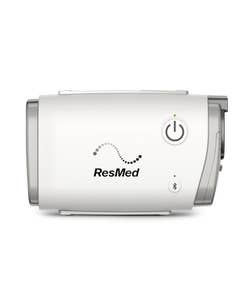
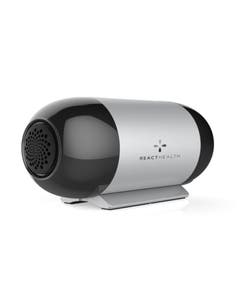
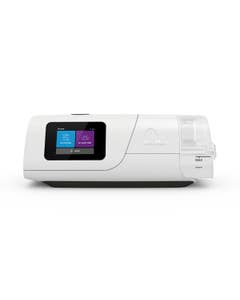
- 2020s and beyond — smart, connected, and increasingly quiet. Modern flagship machines run at whisper-level noise output, sync automatically to smartphone apps, and increasingly incorporate AI-assisted features that fine-tune pressure and flag potential issues without a clinic visit. What started as a loud box in another room has become quiet enough to sit on a nightstand and go largely unnoticed.




What Hasn't Changed Since 1981
For all the engineering that's gone into CPAP over more than four decades, the core mechanism Sullivan proved with a vacuum cleaner motor has never actually changed: a continuous stream of pressurized air, delivered through a mask, holding the airway open so it can't collapse. Every advancement since — quieter motors, humidification, auto-adjusting pressure, smart data — has been refinement around that same original insight, not a replacement for it.
That's a fairly remarkable track record for a first-draft prototype. Most medical devices go through years of iteration before the underlying concept is even validated. Sullivan's worked well enough, on the first real attempt, that the fundamental idea has needed no reinvention in 45 years — only refinement.
Conclusion
The machine next to your bed tonight is a direct descendant of a device built in an Australian workshop out of a vacuum cleaner motor and a hand-molded fiberglass mask. It took a doctor willing to test an unproven idea on real patients, and patients willing to tolerate a loud, uncomfortable machine because the alternative was worse, to prove that continuous airway pressure actually worked. Everything since — the quiet motors, the auto-adjusting pressure, the app on your phone — has been more than 40 years of engineers chasing the same goal: making that original 1981 idea easier to live with, one generation at a time.
This content is for informational purposes only and is not a substitute for professional medical advice. Talk to your sleep medicine provider about which CPAP technology is right for your specific diagnosis.