


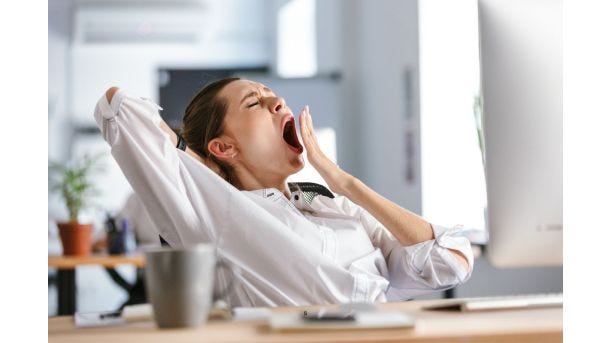
Beyond Fatigue: How Sleep Apnea Ruins Relationships, Career, and Long-Term Health
Key Takeaways
-
Sleep deprivation causes heightened irritability, lowers empathy, and contributes to relationship conflict, often leading to partners sleeping apart.
-
Fatigue is a significant risk factor in the workplace and on the road, where sleep-deprived driving is comparable to being legally impaired.
-
Lack of sleep disrupts key hunger hormones (Ghrelin and Leptin), increasing appetite and contributing to a higher risk of weight gain and Type 2 Diabetes.
While speaking to a person suffering from sleep apnea on the phone, I listened as he described why he needed his new CPAP mask overnighted to him. “I get really stressed. I am tired all day. My wife yells at me for keeping her up all night. My life is just plain miserable without my CPAP. So please overnight the CPAP mask to me today no matter what the cost.” Of course, we understood and obliged. Another satisfied customer at The CPAP Shop.
Nevertheless, that got me thinking about sleep deprivation and its effect on a person’s body, relationships and their overall quality of life. Sleep, along with air, food and water are necessary and critical aspects to a normal functioning human (long-term total sleep deprivation has caused death in lab animals). A complete absence of sleep over long periods of time is impossible to achieve as vital organs including the brain begin to malfunction and shut down. As a tribute to its negative correlation to brain functions, sleep deprivation is has been used in many instances as an interrogation technique and considered by some as torture.
The effect of sleep deprivation on human cognitive functioning has been documented in numerous studies. Alertness and cognitive skills such as memory, reasoning and seeing, hearing and speaking all are dramatically impacted due to sleep deprivation. A simple example is one of trying to drive while sleep deprived; many of us have been in this situation and have felt the nearly helplessness as our bodies try to force us to sleep. In fact, the American Academy of Sleep Medicine (AASM)(LINK) reports that one in every five serious motor vehicle injuries is related to driver fatigue, with 80,000 drivers falling asleep behind the wheel every day and 250,000 accidents every year related to sleep. Being sleep deprived while driving has the same affects as driving with intoxicated; driving abilities, reaction times and attempts by the brain to overcompensate all contribute to potentially fatal consequences.
There have also been studies linking the association of sleep deprivation to weight gain. It sometimes is a “chicken or the egg” syndrome but sleep deprivation has been known to increase a person’s appetite. This potentially can be due to a disruption of hormones, which regulate metabolism and appetite. Moreover, a 2005 study showed people who consistently slept only a few hours a night were more likely to have associations with diabetes type 2. Sleep deprivation has also shown to be negative effects on growth and the healing process.
VIDEO: Man Stays Awake for 11 Days Without Sleep
Interestingly enough, Randy Gardner holds the scientifically documented record for the longest period of time a human being has intentionally gone without sleep not using stimulants of any kind. Gardner stayed awake for 264 hours (11 days). Of course, unless being in the Guinness Book of World Records is important to you, doing this is not something a CPAP user considers as fun. Our goal is sleep, not the alternative. I am sure the conversation I had with our customer can be repeated over and over. Without my CPAP mask, my life is miserable…I NEED MY SLEEP!

This post was updated with the latest information in November 2025.
While speaking to a person suffering from sleep apnea on the phone, I listened as he described why he needed his new CPAP mask overnighted to him.
“I get really stressed. I am tired all day. My wife yells at me for keeping her up all night. My life is just plain miserable without my CPAP. So please overnight the CPAP mask to me today no matter what the cost.”
Of course, we understood and obliged. Another satisfied customer at The CPAP Shop.
Nevertheless, that got me thinking about sleep deprivation and its effect on a person’s body, relationships and their overall quality of life. Sleep, along with air, food and water are necessary and critical aspects to a normal functioning human (long-term total sleep deprivation has caused death in lab animals). A complete absence of sleep over long periods of time is impossible to achieve as vital organs including the brain begin to malfunction and shut down. As a tribute to its negative correlation to brain functions, sleep deprivation is has been used in many instances as an interrogation technique and considered by some as torture.
The Hidden Costs of Sleep Deprivation: From Workplace Risk to Relationship Strain
Chronic exhaustion is often dismissed as a normal part of a busy modern life. However, persistent sleep deprivation, especially when caused by a medical condition like Obstructive Sleep Apnea (OSA), is a profound health crisis that doesn't just make you tired; it systematically erodes your job performance, your personal relationships, and your long-term physical health.
The story of a frantic customer needing a CPAP mask overnight because his life felt miserable without his therapy is a common one. Sleep is a pillar of human function. When it's compromised, the consequences are severe and far-reaching.
The Personal Toll: Relationships and Mental Health
Sleep deprivation doesn't just affect you; it impacts everyone around you.
Relationship Strain
The lack of restorative sleep alters your emotional regulation and behavior, creating friction with family and partners:
-
Emotional Volatility: Tired individuals often display heightened irritability, impatience, and difficulty managing stress. Studies show that couples where one partner is sleep-deprived report higher levels of conflict and lower levels of empathy.
-
The Snoring Factor: For partners of untreated OSA sufferers, the relentless, loud snoring often causes fragmented sleep for both people. This dual sleep deprivation quickly becomes a source of resentment and can lead to couples sleeping in separate rooms.
Cognitive Decline
Sleep is essential for memory consolidation and problem-solving. Chronic deprivation mimics cognitive impairment:
-
Impaired Judgement: Simple tasks take longer, and complex decision-making is severely hampered. This contributes to poor choices at work and increased impulsivity.
-
Mood Disorders: Untreated sleep disorders are strongly linked to the onset or worsening of depression and anxiety.
The Professional and Public Safety Risks
Sleep deprivation carries measurable risks in the workplace and on the road, with fatigue recognized as a primary safety threat.
Job Performance and Risk
The cost of fatigue in productivity and accidents is staggering.
| Impact Area | Consequences of Sleep Deprivation |
| Alertness & Focus | Reduced ability to sustain attention; increased likelihood of making procedural errors and forgetting details. |
| Workplace Safety | Fatigue is a factor in thousands of industrial accidents annually, costing billions in lost productivity and medical expenses. |
| Driving Danger | Driving while fatigued is often compared to driving under the influence. Fatigue is responsible for over 100,000 traffic accidents and 1,500 fatalities each year in the U.S. |
The Body's Effect on Zero Sleep: Hormones and Metabolism
Physically, chronic sleep loss compromises key regulatory systems.
-
Weight Gain and Metabolism: Sleep regulates the key appetite hormones: Ghrelin (which signals hunger) and Leptin (which signals fullness). When sleep is inadequate, Ghrelin levels rise, and Leptin levels fall, leading to increased appetite, cravings for carbohydrates, and a higher risk of obesity and Type 2 Diabetes.
-
Immune Function: Restorative sleep is necessary for the immune system to produce protective cytokines and infection-fighting antibodies. Sleep-deprived individuals are more susceptible to illness and take longer to recover.
The CPAP Solution
If chronic sleep deprivation is ruining your life, the first step is identifying the cause. For millions, the cause is undiagnosed or untreated Obstructive Sleep Apnea.
CPAP therapy, by stabilizing your breathing and ensuring restorative sleep, is the most effective way to reverse the cycle of deprivation, restoring cognitive function, emotional balance, and physical health.
To learn more about sleep apnea and CPAP therapy, or to purchase top-rated CPAP products, give our customer care team at The CPAP Shop call at 866-414-9700. Our team would be happy to help you in your health journey.


