



Poor Quality, Quantity of Sleep Linked to Cardiovascular Disease
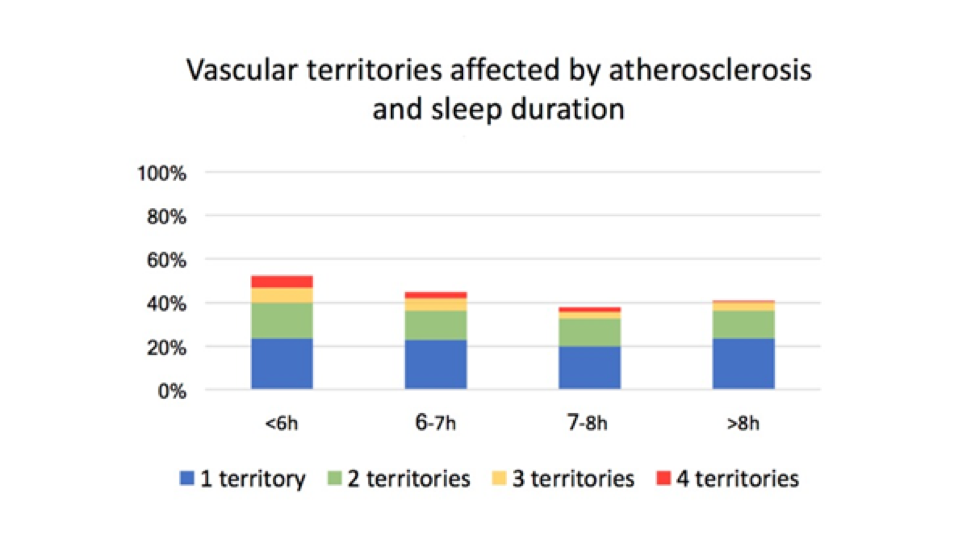
Researchers confirm that sleeping less than 6 hours or a night of fragmented sleep is associated with increased risk of cardiovascular disease. This conclusion is based on the results of the Progression of Early Subclinical Atherosclerosis (PESA) study.1 Both short or long sleep duration, as well as poor quality of sleep, contributes to an increased risk of asymptomatic atherosclerosis. This is a condition in which fat, cholesterol, and other fatty substances harden and narrow the arteries.
The Study
A total of 3974 healthy, middle-aged adults wore a wristband monitor for a week to record sleep quality and quantity. Furthermore, the average age of the participants was 46 years and 63% were men.
The participants were divided into four groups based on sleep duration: (1) below 6 hours, (2) 6-7 hours, (3) 7-8 hours, (4) above 8 hours. They were then further divided into five quintiles based on quality of sleep. Medical history, blood tests, and also dietary habits were all collected. Using a 3D vascular ultrasound and coronary CT, researchers then looked for noncoronary atherosclerosis and coronary calcification.
The Results
Researchers first accounted for age, gender, physical activity, body mass index, smoking, alcohol consumption, blood pressure, blood glucose level, cholesterol calorie consumption per day, depression, obstructive sleep apnea, and other socio-economic factors. They then concluded that very short sleepers had significantly more atherosclerosis than those who slept for 7 to 8 hours a night.
Further, those with the most fragmented sleep were more likely to have multiple sections of arteries with atherosclerosis compared to those with less fragmented sleep. Fragmented sleep is a symptom of sleep apnea. With a lack of oxygen to the brain due to the closing of airways, the body constantly jolts itself awake. This typically occurs without the person’s knowledge. However, the impact is clear—daytime drowsiness, irritability, mood swings, weight gain, and a whole host of other more serious medical conditions.
The Take-Away
“People who had short or disrupted sleep were also more likely to have metabolic syndrome, which refers to the combination of diabetes, high blood pressure, and obesity, and depicts an unhealthy lifestyle.” said study author Dr. Dominguez, of the Spanish National Centre for Cardiovascular Research in Madrid.2
Further, “failure to get enough sleep and restlessness during the night should be considered risk factors for blocking or narrowing of the arteries,” he said.2
References:
1. Rodrigues FD, Fernandez JM, Friera LF, et al. Association of actigraphy-measured sleep parameters and subclinical atherosclerotic burden: the PESA study. Eur Heart J. 2018 Aug;38(1 Supp):474-5.
2. Short and fragmented sleep linked to hardened arteries [press release]. Eurpean Society of Cardiology. 2018 Aug 26. escardio.org/The-ESC/Press-Office/Press-releases/Short-and-fragmented-sleep-linked-to-hardened-arteries. Accessed September 10, 2018.
How can The CPAP Shop help? Our trained sleep technicians and customer service representatives can help determine the best sleep machine and accessories suited for you to guarantee a full night’s rest. Email us at questions@thecpapshop.com or also give us a call at 866-414-9700.
Chris Vasta is the president of The CPAP Shop and an expert in sleep and respiratory therapy. He often provides insights on product design and functionality on various manufacturers’ prototypes and is frequently tapped to provide reviews on new releases.